MasterSearch

AddThis

Showing posts with label VC. Show all posts

June 30, 2016

#Startups in #Israel continue to raise the bar and set standards for tech ecosystems around the world

Startups in Israel raise US$547 million in June


Winter fails to appear in Israel; 36 startups raise $547m in June

Photo credit: Moyan Brenn .
Startups in Israel continue to raise the bar and set standards for tech ecosystems around the world. A total of 36 startups from the country raised a combined US$547 million from investors, according to data compiled by Israeli techies Nir Ben and Hillel Fuld. That's despite all the talk of an impending credit crunch and weakening VC appetite.
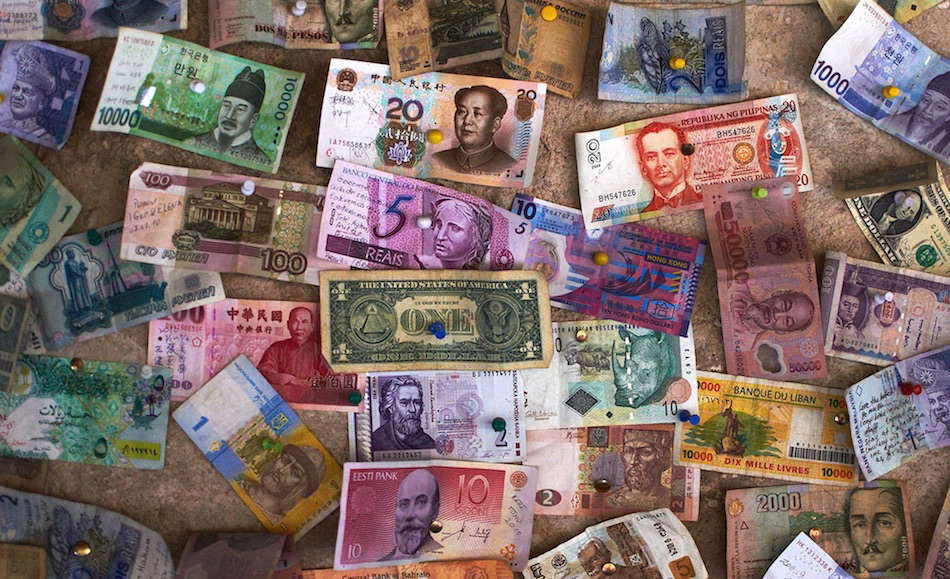
To give you some context, Israeli startups pocketed an average of US$300 million every month in 2015. June's figures mean they're on course to smash that record – and perhaps double the average – by the end of the year.
Here are all the funding announcements in June:

1. Walkme

Walkme helps guide people through confusing and complicated online services. It raised US$50 million at a US$400 million valuation in a series E round led by Insight Venture Partners.

2. Meta

Meta is an augmented reality startup which develops both hardware and software. It nabbed US$50 million in series B funding to expand its range of products and scale into markets like China. The round was led by Horizons Ventures.

3. Interlude

Interlude is a nifty new media and technology company that's trying to develop different kinds of videos which respond to a person's emotions and interests. It raised approximately US$50 million (exact terms were undisclosed) from Sony Pictures Entertainment.

4. Trax

Trax is headquartered in Singapore but has Israeli founders and maintains a large research and development office in Tel Aviv. The startup builds computer vision technology products for the retail and "fast-moving consumer goods" sectors, helping brands get more control over how their products are arranged on shelves. It raised US$40 million in series C at a valuation of US$220 million.

5. Weka

Weka is trying to radically simplify the way storage is deployed in datacenters. It works mainly with enterprise and cloud companies. The startup got US$22.5 million in series B led by Walden Riverwood Ventures.

6. SundaySky

SundaySky generates personalized videos based on user profiles every time they visit a website. It's trying to help businesses engage with their customers better. The startup raised US$30 million series D led by Viola Private Equity.

7. Airobotics

Airobotics is an autonomous drone startup that's trying to take humans out of the equation when it comes to piloting drones. It raised US$28.5 million in a "combined" series A and B.

8. Zimperium

Zimperium is a cybersecurity startup focusing on mobile and in-app protection. It pocketed US$25 million led by Warburg Pincus.

April 28, 2016

Which are The Hottest #FinTech #VC's in Europe Backing the Next Big Breakthrough

The Hottest FinTech Investors in Europe to Back the Next Big Breakthrough in FinTech


These are the main #FinTech investors in Europe.  

The Hottest FinTech Investors in Europe to Back the Next Big Breakthrough in FinTech

Big breaks across industries don’t usually happen without VCs backing them. Success stories in most cases have co-authors and in 2016, VCs are the ones to provide a financial fuel to bright entrepreneurs and ideas with a high disruptive potential.
While some VCs are operating across regions, some have a particular geographical focus. Since Europe is one of the world’s hubs of innovation, the UK and other countries in Europe and in the Nordic region have their dedicated investors. The US is also rich on FinTech-focused VCs that have a keen interest in discovering the next big thing in FinTech. 
Aside from VCs, there are also FinTech accelerators accountable for success stories, both in the US and in Europe.
This time, let’s look at some of the hottest FinTech investors in Europe that also invest in other regions along with European venture allocations.

BBVA Ventures

Description: BBVA Ventures provides funding and expertise to promising technology companies disrupting financial services. The firm works with the entrepreneurs and co-investors in the US and EU, thereby becoming a long-term partner in their success.
Stage/size of investments: Early-stage venture to later-stage venture investments
Segments: FinTech, financial services
Portfolio of payments companies: Prosper, DocuSign, Simple, Radius, Coinbase, SumUp, Personal Capital, Ribbit Capital

Santander InnoVentures

Description: The company launched its $100-million fund in July 2014 to get closer to the wave of disruptive innovation in the FinTech space. Santander InnoVentures aims to support the digital revolution to make sure its customers around the world benefit from the latest know-how and innovations across the banking group’s geographies.
Stage/size of investments: Small companies and startups
Segments: FinTech exclusive
Portfolio: iZettle, MyCheck, Ripple, Kabbage, Cyanogen

Anthemis Group

Description: Anthemis Group is the venture investment and advisory firm at the center of a vibrant ecosystem of startups and financial institutions dedicated to reinventing financial services for the digital world. The firm boasts of being committed investors, thoughtful advisors, active conveners and dedicated problem solvers who share a passion for technology and a belief in the transformative power of digital financial services.
Stage/size of investments: Seed, early-stage ventures and later-stage venture investments
Segments: Retail banking & consumer finance, business & corporate banking, payments, wealth & asset management, capital markets & trading, insurance & risk management, data, technology & infrastructure
Portfolio of payments companies: Moven, Simple, Vericash, Fidor Bank

Index Ventures

Description: Index Ventures backs the best and most ambitious entrepreneurs and help them make their ideas real and lasting. The entrepreneurs it teams up with were born to build their businesses—it is their life’s mission. Working side-by-side with these visionaries makes Index Ventures incredibly optimistic about the future. The transformative companies they’re building, include Dropbox, Etsy, Sonos, SoundCloud, Flipboard, King, BlaBlaCar, Squarespace, Just Eat, Lookout, Hortonworks, Nasty Gal, Pure Storage, Supercell, Criteo, Funding Circle and many others.
Stage/size of investments: Index invests in various multiple stages including seed, early-stage venture, later-stage venture and private equity investments.
Segments: Information technology, life sciences
Portfolio of payment companies: iZettle, Clinkle, TransferWise, Funding Circle, Xapo, Swipely, BitPay, iZettle, CrowdRise, Funding Circle

AXA Strategic Ventures

Description: AXA Strategic Ventures’ commitment to founders and teams is to enhance value and maximize impact, therefore enabling you to engage individuals, customers and businesses. The firm maintains long-term, strategic focus. In other words, AXA Strategic Ventures want to help you become real players in the sharing economy—when you succeed, they succeed.
Stage/size of investments: All stages
Segments: Alternative business models, big data, climate change, financial inclusion and health
Portfolio: FundShop, WIDMEE, FLYR, Policy Genius

October 26, 2015

Are Some Tech #Startups ‘Subprime’? - Moritz from Sequoia Capital seems to think so

In the age of the #unicorn, many are prioritizing valuations  over deal terms. 

" to those who seem to be­lieve that the cur­rent state of af­fairs is sus­tain-able, I would ask this: When in his-tory has ever-in­creas­ing fi­nan­cial com­plex­ity, lack of trans­parency, per­verse in­cen­tives and new ways to ex­tend credit and in­crease lever-age not even­tu­ally led to dis­as­ter?"

This from The Wall Street Journal.

Are Some Tech Startups 'Subprime'?

http://www.wsj.com/articles/the-dangers-ahead-if-tech-unicorns-get-gored-1445832492


June 03, 2015

What @Twitter Can Be. #LOWERCASE capital

Chris @Sacca's 8500 word piece on Twitter.  Here is an excerpt:

First, I want to apologize to those of you working in the sensationalist clickbait mines, but this post is not a hit piece. I never said it would be. I am not here to slam the company nor the team. I am not an activist investor. I am a proud Twitter shareholder and Twitter user. I want this company to succeed. I want the people who work at Twitter to win. I want this stock to be worth more. I own more of it than virtually anyone working at the company. So with that kind of skin in the game, I wrote:

“I am going to post a few things that I personally hope the Twitter team will accomplish.”
If at any point I do sound critical or impatient, it is because I believe Twitter can be so much more than it is today. I assume each one of you who owns Twitter shares, and every single one of you who works at the company would agree. Candidly, I have no doubt that Twitter users have 302 million monthly active opinions as to how the product could be
better.


Read the whole piece here: What Twitter Can Be. | LOWERCASE capital

September 30, 2014

Peter Thiel on #Europe's #tech #entrepreneurs & regulators

Europe is a "slacker with low expectations", held back by the poor work ethic of its people

PayPal co-founder Peter Thiel rounds on European tech entrepreneurs and regulators

Murad Ahmed and Sally Davies, FT.com


Europe is a "slacker with low expectations", held back by
the poor work ethic of its people and run by politicians that strangle
technological progress with regulations that are a "cure worse than the
disease".

That is the scathing assessment of Peter Thiel,
co-founder of PayPal, the first venture capitalist to back Facebook and
one of Silicon Valley's most celebrated investors.

Peter Thiel, co-founder of Palantir.
Adam Jeffery | CNBC
Peter Thiel, co-founder of Palantir.
"If you're a slacker with low expectations, those
low expectations are likely to be met," he said. "I don't think optimism
always works. There is a form of pessimism, such as in China where
people work really hard because they are scared that they will be old
while they are still poor.

"Pessimism
in China motivates hard work. Pessimism in Europe has a more
demotivating effect. When you're pessimistic and unmotivated, it has as
self-fulfilling character." Mr Thiel has a reputation for forthright views. In Zero to One, a new book,
he writes that tech start-ups should aspire to become monopolies
because the rapidly shifting nature of the sector ensures they "don't
typically last for ever" and that "disruption", a Silicon Valley
obsession, is a "self-congratulatory buzzword".

  Mr Thiel, a libertarian, also attacked EU regulators and policy makers, which have sought to rein in the likes of Google, Uber and Facebook, where he is a board member, with regulatory probes related to antitrust and privacy.


"Google obviously has a monopoly in search," he said. "There are all
sorts of questions about whether it is abusing that monopoly or not. But
I distrust the power of the EU regulators to make things better. I
think the [technology industry] is dynamic enough that the Google
monopoly will not last for ever. In practice, anything [the EU does] to
micromanage the Google product will produce a cure that's worse than the
disease."

He does have encouraging words to say about London,
which he said straddles continental Europe and the US in attitude and
has overtaken Berlin as the best and "most logical place" to build
technology businesses. "People just work harder here ," he said. "They
just work less hard in Berlin."

Mr Thiel, who has rarely
invested outside of the US, has invested in two start-ups based in the
UK capital: TransferWise, a money transfer business, and Deepmind, an
artificial intelligence group bought by Google for £400 million last
year.

The city's strength is in start-ups that combine financial
services and technology. "London is a financial hub, and unlike New
York, it's not a financial hub where people hate finance," he said.


"There's much more of a self-hating character to New York than there is
to London. This matters, because if you start a tech company in New
York, you will do something very far from finance. Whereas in London, it
would be perfectly respectable to do something with finance and
technology."

But he is critical of Rocket Internet, the German
ecommerce venture capitalist, which announced the pricing for an initial
public offering, targeting a midpoint market capitalisation of €6.2bn,
last week. The €1.5bn IPO was fully subscribed within hours of orders
being taken, leading the group to bring forward the flotation.


"I would not invest in Rocket . . . I would not take a venture capital
firm public, because so much of the value comes from the people who have
started the companies, and its hard to separate the human capital from
the operational component," he said.

He added that Rocket's
companies, which often involve imitating successful business models from
the US and exporting them to new markets, are "much more plays on
globalisation than on technology . . . and I believe technology is more
important than globalisation".


See the article online here: PayPal co-founder Peter Thiel rounds on European tech entrepreneurs and regulators


June 08, 2012

McSweeney’s Internet Tendency: Prospectus for Silicon Valley’s Next Hot Tech IPO, Where Nothing Could Possibly Go Wrong.

http://www.mcsweeneys.net/articles/prospectus-for-silicon-valleys-next-hot-tech-ipo-where-nothing-could-possibly-go-wrong


McSweeney’s Internet Tendency: Prospectus for Silicon Valley’s Next Hot Tech IPO, Where Nothing Could Possibly Go Wrong.


Form S-1

Registration Statement

Under

The Securities Act of 1933


Ponzify, Inc.


LETTER FROM THE FOUNDERS


Forget Facebook. Forget Groupon. Forget everything you know about Silicon Valley. Because Ponzify isn’t like other tech companies. We don’t promise results. We show them to you, on a piece of paper, that has your name and a monetary figure that increases every month.


Our business model is simple: Attract users, advertisers, positive press and a corporate buyer; then, pull the cord on that golden parachute and have cable news book you as an expert on startups from time to time. There may be a book deal in there, too. We haven’t decided.


Users love our product because it’s something free. Venture Capitalists love it because they can imagine themselves talking about it at T.E.D. or on Charlie Rose. Trust us: Once you invest in Ponzify, you’ll have a difficult time investing your money anywhere else ever again.


THE OFFERING


Ponzify, Inc., is offering 15,000,000 shares of its Class A stock. Several times, in fact. Ask enough questions, we’ll let you in on the super secret Class B voting shares. Threaten to go to the SEC, and we’ll meet you near the airport. Just to talk.


We anticipate the initial public offering price of our Class A common stock will be between $35 and $42 per share. Mind you, the bank we hired to underwrite this transaction is privately telling its other clients something entirely different. Something about a guaranteed swing in the stock price and a big pay day for insiders. Sounds sweet. Wish we could get in on that


We expect to list our Class A common stock under the symbol PNZI.


RISK FACTORS


An investment in Ponzify involves significant risks.


User metrics

A significant portion of our income is derived from advertisers who still buy this whole “clicks” and “page count” business. Thus, we plan a vigorous defense of our current metrics while making up new ones with impressive-sounding names. For instance, KonBuy (short for “Konfirmation Bias”) scores the popularity of apps and websites based on whether their titles are intentionally misspelled portmanteaus.


Age Factor

Our CEO, CFO, COO and a bunch of other acronyms were all born after Nirvana released “Nevermind”.


Experience

Did you watch that two-part Frontline special on PBS about the inside story of the global financial crisis? We did. We were like “Dude, that’s like what we’re doing!”


SPECIAL NOTE REGARDING

FORWARD-LOOKING STATEMENTS


This prospectus contains forward-looking statements. For instance, “Our company is built upon a viable revenue model” is a forward-looking statement. All statements other than statements of historical fact, particularly those made by our founders to the press, shareholders or women in bars, will be considered forward-looking statements.


USE OF PROCEEDS


We assume that the net proceeds from the sale of our Class A stocks will net us about $600 million. That money will be used to purchase office space as well as a variety of office equipment, including Dig Dug, Dragon’s Lair and Frogger. We figure that due to the bloated staff size we intend to maintain for far too long, we’ll need at least two Trons. Also, we plan to pay the following celebrities to appear at our recklessly expensive 1st anniversary party: Leonard Nimoy, Don Rickles, The Rolling Stones, the U.S. women’s volleyball team and the entire cast of Game of Thrones (who will be asked to appear costumed and in character).


BUSINESS


Overview

Ponzify is a solutions-oriented global technology leader that specializes in selling paper products.


How we generate revenue

We employ a three-prong strategy to generate revenue.


1. Investment

Until now, if someone asked us if we had V.C., we’d make a joke about how, no, we use condoms. We still make that joke, but now Venture Capitalists hand us a check for a few million every time we do. Apparently, just saying “mobile strategy” is enough of a mobile strategy.


2. Advertising

We tried selling our product to users but that failed miserably; so, we turned to an ad-driven model. The way it works is, we give away the product for free, then lure advertisers with the promise of connecting them to millions of people who hate to pay for things. Amazingly, it works.


3. Accounting

Our primary measurement of revenue is a non-GAAP accounting principle known as Adjusted Consolidated Assumed Income (ACAI). ACAI is an ancient accounting remedy that can slow the aging process of most balance sheets and rejuvenate the face of any company, no matter what the medical community or the FTC might tell you.


CERTAIN RELATIONSHIPS

AND PARTY-RELATED TRANSACTIONS


Indemnification of officers and directors

This was, like, the first thing we did. Well, negotiate our golden parachutes, then this.


Indebtedness of Management

Management is fine. It’s the company you should be worried about. 


Read the article online here: McSweeney’s Internet Tendency: Prospectus for Silicon Valley’s Next Hot Tech IPO, Where Nothing Could Possibly Go Wrong.

>

November 02, 2011

Should you invest in Groupon? -Infographic

The Groupon Investment Flow Chart

Well, it’s finally here: Groupon’s sets the price for its IPO tomorrow, and goes public on Friday. Everything everyone has said about the wildly hyped billion-dollar valuations, the competition they face, the backlash to the backlash, and the inner-workings of the company will be put to the test of that mythical, nebulous creature known to the world at large as “The Market.”
As for what you’re going to do about it? Well, Betabeat is here to help.*
Please meet The Groupon Investment Flow Chart:

groupon-betabeat-chart-larger-1024x928.png (PNG Image, 1024x928 pixels)http://www.betabeat.com/files/2011/11/groupon-betabeat-chart-larger-1024x928.png

Share this|
________________________ The MasterBlog

How Groupon Was Founded

INSIDE GROUPON: The Truth About The World's Most Controversial Company
It's August 2011, and Andrew Mason is agitated.
He's at his desk in the middle of Groupon's wide open, call center-style office in Chicago. His headphones are on. His brow is furrowed.
His company had been the darling of the business press for the past two years. Suddenly it's not.
He can't hang on to a COO. The SEC is asking questions. Industry executives are calling him a ponzi schemer.  Early employees are demanding six-figure pay for 9 to 5 hours. One even filed a lawsuit. Merchant customers are screaming. And Mason and his board, having helped themselves to $900 million of cash that could have gone to the company, are are now being blasted for incompetence and greed.
What a turnabout from a few months earlier, when Groupon was the talk of Wall Street. Then, Groupon was one of the fastest-growing companies in history, spurning $6 billion takeout offers from Google, preparing to go public at a valuation fo $25+ billion. And now everyone was talking about it running out of cash!
So what happened? How did things go so wrong?
And now that Groupon is finally going public, how will the Groupon story end?
This story, as told to us by insiders, answers some of these questions. Our sources all asked to remain anonymous, either in deference to the SEC's "quiet period" rules for companies that plan to go public or in order to remain in compliance with severance agreements with Groupon. Groupon itself declined to comment.

GOING CAPITALIST


andrew mason
Image: AP
In 2006, Andrew Mason was a music major, getting a graduate degree in public policy at the University of Chicago.
Mason maintained a website called Policy Tree, which featured articles like "Karl Rove should be fired or resign over the C.I.A. leak."
On the side, he was doing contract work building databases at a company founded and funded by an entrepreneur named Eric Lefkofsky.
Lefkofsky was already a very rich man, having built several businesses around call centers and the Internet. Mason was an intern, "kind of squatting in their offices," according to one source.
In January 2007, with Lefkofsky's backing, Mason started working on a company — a do-gooder enterprise called The Point.
The Point was a social media platform designed to get groups of people together to solve problems.
The Point was not intended to be a big money-making enterprise, and by one early employee's account, that was fine with most of the staff.
The Point launched in June. It gained modest traction in Chicago, but basically went nowhere.
Every Monday, Lefkofsky, Mason, and a handful of early employees would meet to talk about the Point's progress. One Monday, in the middle of 2008, Lefkofsky raised an idea he had that could revitalize the struggling start-up, based on a campaign he'd seen launched on The Point.
Ordinarily, people used The Point to organize around some sort of cause that might make the world a better place.
But in this case, a group of users decided their cause should be saving money.  Their plan was to round up 20 or so people who all wanted to buy the same product and see if they could get a group discount.
"Eric said maybe this is the thing that we do," says a source who was at the meeting. "Maybe we set up a separate page, make it dedicated to group buying."

At first, Mason and The Point's other early executives dismissed the idea. "It didn't seem core to our mission," says the person who was at the meeting.

Through the rest of the summer and early fall of 2008, Lefkofsky would not let that idea go. He'd bring up all the expensive purses his wife and all her friends were buying, and say, "It's crazy! Couldn't they buy 20 of them and get a discount?"

October 25, 2011

Groupon's Latest Value Raises Doubt -- Andrew Ross Sorkin - NYTimes.com


It looks mightily overvalued still..., but as the article notes:

in fairness, it must be acknowledged that LinkedIn, which had its I.P.O. earlier this year and was criticized for being overhyped, is worth about $9 billion. If you believe LinkedIn’s valuation makes sense, you should load up on Groupon because it looks downright cheap by comparison. (I may have a bridge to sell you, too.)
Here’s just one data point for comparison: LinkedIn is trading at 195 times its free cash flow. If Groupon were valued using the same multiple, it would be worth a whopping $48 billion.
Groupon is planning to sell only about 5 percent of the company, or 34.5 million shares, to the public initially. Having such a small amount of the company available should, at least temporarily, help keep interest high. (The laws of supply and demand are incontrovertible.)
None of this is to suggest that Groupon isn’t a great success story. The three-year-old company has built a remarkable business, upending the direct marketing industry. But that doesn’t mean the company is worth $10 billion — at least not yet.


Read the whole article here: Groupon's Latest Value Raises Doubt -- Andrew Ross Sorkin - NYTimes.com

May 26, 2011

Social Media Companies' Ridiculous Valuations


Can you say bubble?


Infographic: What the Largest Social Media Companies Are Worth

By Derek Thompson, The Atlantic
In 2010, LinkedIn made about $200 million in sales. In 2011, its stock price suggests a market cap of $9 billion. Trading at 45 times its revenue makes LinkedIn the highest price-revenue ratio of any stock in the world, said Espen Robak, president of the firm Pluris Valuation Advisors.

The rest of the social media brat pack is on the cusp of going public. Zynga's IPO could be weeks away. Facebook is expecting a $100 billion valuation by IPO in 2012. What kind of wild valuation multiples could we see from the next batch of upstarts? The cool chart below* answers that question. The upshot: Of the companies earning revenue, Twitter has the highest current revenue-valuation ratio.

GLG-TECHBUBBLE_Infographic.png

http://cdn.theatlantic.com/static/mt/assets/what-were-reading/GLG-TECHBUBBLE_Infographic.png

* To answer the question posed by the chart (Is there a tech bubble?) the best answer is: This chart doesn't have the answer. Investors are willing to pay the prices they're paying for private and public stock either because they believe they can get their money out before the market realizes there is a bubble (a risky strategy) or because they really think that these companies will grow quickly and eventually settle at mundane multiples, like Google and Microsoft. Graph courtesy of Gplus.
This article available online at:


_______________________________________
Check it out on The MasterTech Blog

May 18, 2011

In Silicon Valley, Buying Companies for Their Engineers - NYTimes.com


Acquisition: For Buyers of Web Start-Ups, Quest to Corral Young Talent
May 17, 2011


SAN FRANCISCO — Sam Lessin sold his Web start-up to Facebook for millions last year, and Facebook promptly shut it down. All Facebook wanted was Mr. Lessin.
That is what it has come to in bubbly Silicon Valley. Companies like Facebook, Google and Zynga are so hungry for the best talent that they are buying start-ups to get their founders and engineers — and then jettisoning their products.
Some technology blogs call it being “acqhired.” The companies doing the buying say it is a talent acquisition, and it typically comes with a price per head.
“Engineers are worth half a million to one million,” said Vaughan Smith, Facebook’s director of corporate development, who has helped negotiate many of the 20 or so talent acquisitions made by Facebook in the last four years. The money — in the form of stock — is often distributed among the start-up’s founders, employees and investors. The acquired employees also get a rich salary and often more stock options, which makes this a good time for entrepreneurial engineers.
Mr. Lessin, who is 27, happily traded his dream of becoming the next Internet superstar for a prominent job with Facebook. “The impact here is astronomical,” said Mr. Lessin, whose start-up was called Drop.io. “It’s awesome.”
But the deals may not be so good for everyone. Some Silicon Valley veterans fear that companies are overpaying for talent and that some of the acquired employees will defect as soon as they can, perhaps because they will get restless in a corporate environment. And venture capitalists, who hope for windfalls in the tens or hundreds of millions if not more, will only grudgingly settle for less.
“It is not what we are aiming for as investors,” said Dave McClure, founder of 500 Startups, a venture fund. “We are trying to build large, lasting businesses.”
Still, Mr. McClure and other investors said a talent acquisition that offers a modest payoff is better than no deal at all if a start-up sputters. And while a sale for a few million will not make or break their funds, it could amount to a tidy sum for an engineer just out of college, they said.
“Who are we to tell a young entrepreneur that they can’t have their first million?” said Paul Graham, a partner at Y Combinator, a well-known incubator that has invested in hundreds of start-ups.

May 08, 2011

The ‘Facebook Class': Apps & Fortune Makers

The Class That Built Apps, and Fortunes

May 7, 2011

NYTimes.com


STANFORD, Calif.
ALL right, class, here’s your homework assignment: Devise an app. Get people to use it. Repeat.
That was the task for some Stanford students in the fall of 2007, in what became known here as the “Facebook Class.”
No one expected what happened next.
The students ended up getting millions of users for free apps that they designed to run on Facebook. And, as advertising rolled in, some of those students started making far more money than their professors.
Almost overnight, the Facebook Class fired up the careers and fortunes of more than two dozen students and teachers here. It also helped to pioneer a new model of entrepreneurship that has upturned the tech establishment: the lean start-up.
“Everything was happening so fast,” recalls Joachim De Lombaert, now 23. His team’s app netted $3,000 a day and morphed into a company that later sold for a six-figure sum.
“I almost didn’t realize what it all meant,” he says.
Neither did many of his classmates. Back then, Facebook apps were a novelty. The iPhone had just arrived, and the first Android phone was a year off.
But by teaching students to build no-frills apps, distribute them quickly and worry about perfecting them later, the Facebook Class stumbled upon what has become standard operating procedure for a new generation of entrepreneurs and investors in Silicon Valley and beyond. For many, the long trek from idea to product to company has turned into a sprint.
Start-ups once required a lot of money, time and people. But over the past decade, free, open-source software and “cloud” services have brought costs down, while ad networks help bring in revenue quickly.
The app phenomenon has accentuated the trend and helped unleash what some call a new wave of technology innovation — and what others call a bubble.
Early on, the Facebook Class became a microcosm of Silicon Valley. Working in teams of three, the 75 students created apps that collectively had 16 million users in just 10 weeks. Many of those apps were sort of silly: Mr. De Lombaert’s, for example, allowed users to send “hotness” points to Facebook friends. Yet during the term, the apps, free for users, generated roughly $1 million in advertising revenue.

April 14, 2011

Dot-Com Veterans reemerge


Scarred by the Dot-Com Bust, Reinvented for Social Media

Thomas WeiselNoah Berger/Bloomberg NewsBeen there: Thomas Weisel scouted technology start-ups in the 1990s and is doing so again.
SAN FRANCISCO — Thomas Weisel doesn't have much personal experience with social media. He has never opened a Facebook or Twitter account, and he has resisted buying an iPhone.
But Mr. Weisel knows a lot about overheated markets. His firm, Thomas Weisel Partners Group, was a dominant force in taking technology companies public during the dot-com boom and was hobbled when that bubble burst in 2000.
Today, Mr. Weisel, 70, is assessing the industry landscape from his corner office at the Stifel Financial Corporation, the brokerage firm that bought his struggling company in April 2010. Although the current frenzy raises concerns, he says he thinks it is unfair to compare Internet stocks during the late 1990s to social media companies now.
"In a sentence, the big difference is these companies, in many cases, are enormously profitable out of the gate," he said.
Mr. Weisel, who as co-chairman of Stifel's board is still out hustling banking business, is among the many heavyweights from the dot-com days who are reinventing themselves in the era of social media.
Mary Meeker, the research analyst who was called the Queen of the Internet, recently joined theventure capital giant Kleiner Perkins Caufield & Byers. Frank Quattrone, the Wall Street investment banker who helped take Amazon.com public in 1997, now has his own boutique advisory group working with technology start-ups and stalwarts, including National Semiconductor on its recent deal with Texas Instruments. Sandy Robertson, previously a founder of Robertson Stephens, a technology banking firm, joined Francisco Partners, a private equity shop that focuses on technology.
Lise Buyer, a former Credit Suisse First Boston analyst who currently advises companies on potential public offerings at her firm, Class V Group, jokes that she is "running into everyone" she knew from the go-go period of the late 1990s.
"Social media is a new frontier," Mr. Robertson said.These veterans offer a unique perspective, having survived the previous technology craze and now playing a role in the current one.
Mr. Weisel, a Rochester, Minn., native who was once a competitive speed skater, rose to fame during the technology boom. In the early 1990s, he ran Montgomery Securities, one of the boutique banks known as the Four Horsemen that dominated technology underwriting during the decade. During his tenure, Mr. Weisel took Yahoo public and helped orchestrate StrataCom's sale to Cisco for $4.7 billion, at the time the largest technology acquisition that year.
But like many at the time, Mr. Weisel was swept up in the frenzy. In an interview in January 2000, he declared the tech boom was "the Super Bowl of all Super Bowls." Just a couple months later, the bubble burst — a crushing blow to his firm.After NationsBank bought Montgomery in 1997, he struck out on his own, starting Thomas Weisel Partners. He quickly landed a number of big assignments, including advising Yahoo on its acquisition of GeoCities.
In the aftermath, Mr. Weisel tried to diversify his firm away from technology, which accounted for more than 80 percent of revenue. He expanded into health care and consumer products. To raise capital, he took Thomas Weisel public in 2006.
But the firm never really recovered from the dot-com bust, and in 2010, it was sold to Stifel Financial.
His experience over the last decade has influenced his view. While he remains bullish on technology broadly, he says social media stocks are far from a slam dunk.
"They have great potential, but they have to continue to produce," Mr. Weisel said.
After years of managing, Mr. Weisel is happy to play the role of sage counsel. He regularly meets with technology entrepreneurs and executives, to help Stifel Financial land deals.
The notable difference this time is the underlying business models of many companies, he says. Technology costs are minimal, which allows social networking sites to be profitable almost immediately. During the dot-com boom, companies burned through cash and took years to turn a profit — if they did at all.
"For the most part, these are real companies with real revenue and are generating real cash flow," he said.
Even so, Mr. Weisel says it is critical for companies like Groupon, which is said to be valued at roughly $25 billion, to maintain their leadership position.
"First-mover advantage is key," Mr. Weisel said. "If they don't continue to produce, someone next door will come in and build a better mouse trap."
He points to MySpace as a cautionary tale. In 2006, it was the top social networking site, with users topping 50 million that year, according to the research firm comScore. But it has steadily ceded ground since then to Facebook, which claims 150.7 million users today versus 37.7 million for MySpace. Its current owner, the News Corporation, recently put MySpace on the auction block.
Mr. Weisel is also watching valuations. Companies like Facebook, which is worth an estimated $50 billion, may not be able to justify such numbers unless their strategies evolve and they find new sources of profit.
"Right now, these business models are typically brand new and not fully vetted," Mr. Weisel said. "They have to figure how to continue to monetize the traffic they are getting or valuations will fall off."

The Barons of Two Booms

Other major Wall Street players from the dot-com bubble have reinvented themselves.
Sandy Robertson
Sandy Robertson
THEN: A founder of the boutique bank Robertson Stephens, he proclaimed in 1999 that tech companies were the most expensive stocks ever.
NOW: While he wonders if sites like Facebook are the modern equivalent of the defunct citizens' band radio, Mr. Robertson, an executive at the private equity firm Francisco Partners and a director at the software company Salesforce.com, sees great potential.
Mary Meeker
Mary Meeker
THEN: As an analyst for the investment bank Morgan Stanley, Ms. Meeker was referred to as the Queen of the Internet for her bullish investment calls on technology companies like Amazon.com and eBay.
NOW: Ms. Meeker left her perch at Morgan Stanley in late 2010 to join Kleiner Perkins Caufield & Byers, the venture capital firm based in San Francisco. An investor in the start-ups Groupon and Zynga, the firm recently introduced a $250 million social media fund.
Henry Blodget
Henry Blodget
THEN: Once a high-flying technology analyst at Merrill Lynch whose stock recommendations often moved the market, Mr. Blodget was accused by regulators of issuing positive ratings on stocks in public while deriding them in private e-mails. As part of a settlement, he was barred from the securities industry.
NOW: Mr. Blodget is currently the editor and chief executive of The Business Insider, a gossipy news site that covers Wall Street. He has more than 28,000 followers on Twitter.


Sent from a wireless device.

Subscribe to The MasterTech's Feeds

Add This